 |
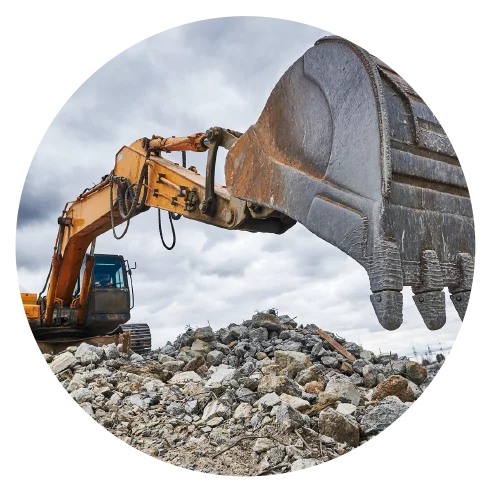
Excavator
A machine modeled history
The excavator is a machine used on most
construction sites for multiple uses.
Heavy and powerful in its use for construction,
it is versatile with its cab that can rotate up to 360° and it can bring lots
of additional equipments (hence the nickmane “tool holder”).
An important feature that gives it many
advantages and a great manoeuvrability. This feature makes it stand out from
backhoe loaders since it offers less mobility.
Used excavator ads
|
|
|
 What is the history of the excavator? What is the history of the excavator?
The history of the excavator is old and started
in 1796 with the invention of the steam shovel. But it’s only a few decades
later, in 1839 to be exact, that the first patented excavator with a mechanical
boom: the Otis steam excavator. This excavator has largely helped develop the
mining and construction industry of the time. Until the end of the 19th
century, excavators are all operated from chains or cables. In 1897, the
company Kilgore Machine Co., based in Minneapolis, patented an excavator, using
steam, but operated with a hydraulic system. Like the hundreds of excavators
that dug the Panama canal at the beginning of the 20th century, the
excavators from this era were mounted on rails and weren’t very mobile.
In the 20s, manufacturers started producing
modern machines that look like the ones we know nowadays. The excavators are
now mounted on tracks or wheels and used gaz. The mobility is increased. The
first excavator to rotate to 360° is the Bucyrus 120-B. It became available for
sale in 1925. During WWII, the demand for construction machines amplified. The
excavators were used to dig trenches but, more importantly, to rebuild during
the after war.
|
 |
|
|
 |
The different uses of an excavator
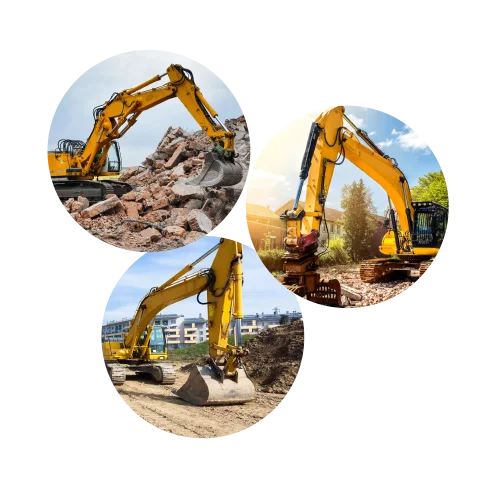
The areas of application of an excavator are
plentiful. It is widely used in the construction industry and is present on
most construction sites that need powerful machines. However, there is a
wide range of excavators with different capacities, sizes and uses. Moreover,
with the additional tools, it gets more versatility. Here’s a list,
non-exhaustive, of the main uses of an excavator. It is used for:
- - Earthmoving and sanitation works
- - Demolition sites
- - Material extraction in quarries
- - Various handling works (ex. : sorting,
bulk material handling, etc.)
- - Farming, forester and landscaping works
(ex. : grubbing)
- - Well, trench digging
- - Load lifting
- - Underground works
|
|
|
The technical characteristics
There are different types of excavators
for different uses. They fall into three categories:
- -
Wheel excavators: they are usually used in urban areas, since
they can move on public roads. In order to overcome their lack of stability,
they are equipped with stabilizers and a blade that increases the gravity to
the ground. .
- -
Track excavators: more stable and often more powerful, they
are used on rough terrains. Some track excavators can be equipped with a
flotation system for maritime works (harbors, swamps, ponds,
etc.)
- -
Spider diggers: they are called like this because of the way
they move. They have three legs and sometimes can be equipped with tyres. They
are used in sensible areas that are hard to access such as water or mountain
enviromnent. They are also used for earthmoving and different delicate
operations.
Then, they stand out by their bucket and arms.
The go for digger is the most used excavator for construction work. The arm
brings the bucket towards the machine in order to fill it and quickly excavate
all sorts of materials. The face shovel is better suited for heavy work such as
those done in quarries. Its bucket can be loaded from the front. Cable shovels
are sometimes used in quarries. It can be noted that in the last decades,
mini-excavators have been introduced to people’s and small companies market and
offer an inexpensive alternative for different works.
Excavators benefit from a great versatility
thanks to the many equipments that can be added. Here is some of the
equipments:
- - Demolition
mass
- - Grab bucket
or pliers
- - Different
types of retro buckets
- - Hydraulic
rock breaker
- - The handling
accessories such as the hook, the widger, the pliers or the
electromagnet
- - Backfill
blade
|
|
|
The main excavator manufacturers
An excavator is one of the most used machines
in the world and the development of compact excavators or mini-excavators
creates an important competition in this industry. Manufacturers are able to
offer different types of excavators with advantages such as energy saving,
safety, performances or the maintenance costs. Kubota is one of the leading
world manufacturer of mini-excavators. For the other types of excavators, there
is Caterpillar, with their latest models like the cri Cat 320 and 323, and
Komatsu with their PW118MR-11 midi-excavator (average size compact excavator).
These two manufacturers are closely followed by Volvo, and Liebherr.
|
 |
|
|
|
 
  
|
Main excavator ranges
|